
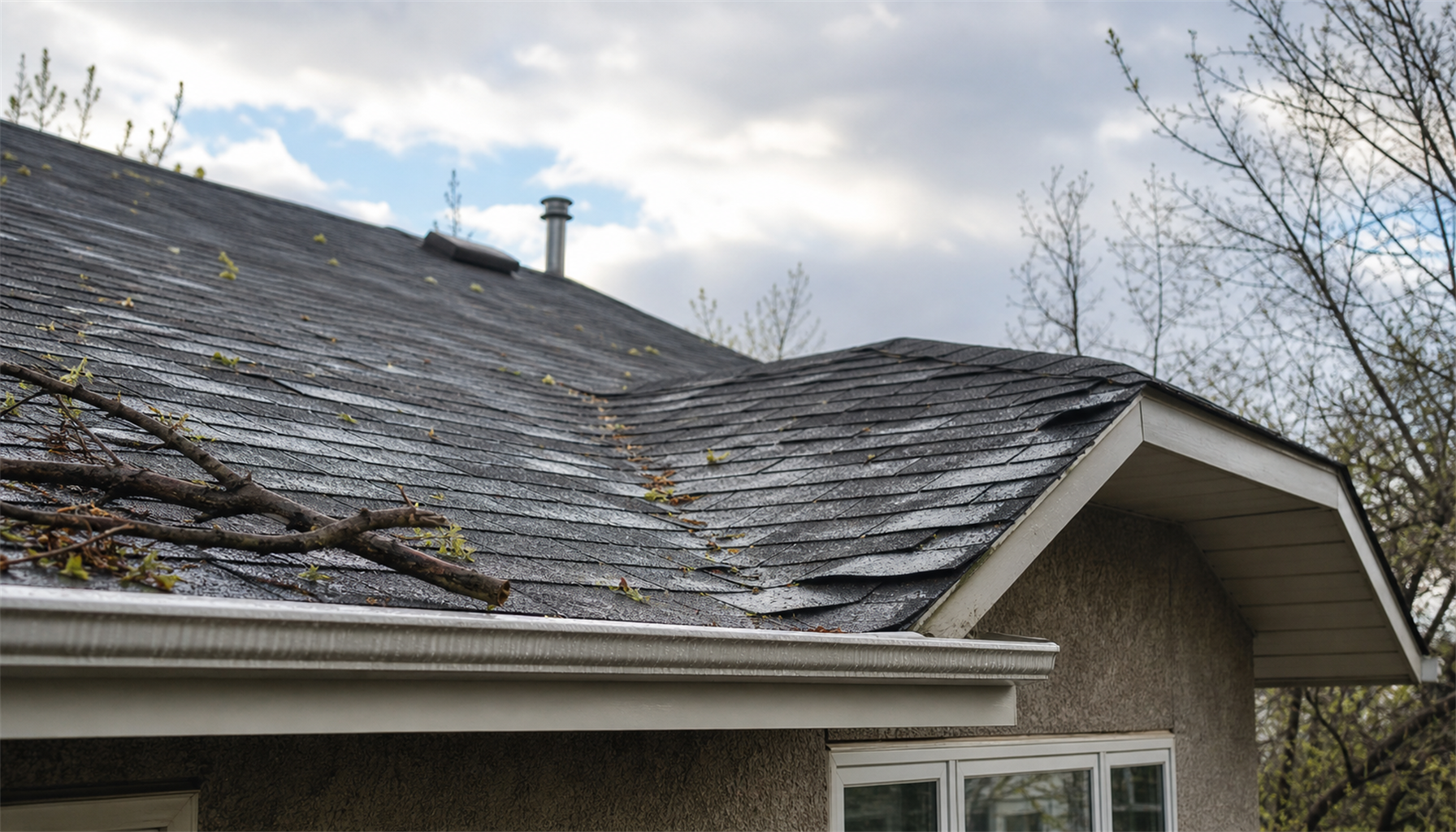
Winnipeg gets straight-line winds that hit 100 km/h or more during Prairie storms, microburst downdrafts that can lift entire sections of shingles in seconds, and the occasional tornado-warning event that drops branches across whole neighbourhoods overnight. Wind damage to a roof rarely looks like what people expect. The obvious lifted shingles are easy to spot, but the bigger problem is usually the shingles that were partially lifted and resettled with broken seal strips. They’ll look fine for a season and then start leaking with the first heavy rain next spring. We’ve handled storm damage repairs across Winnipeg since 2011, including the major events that hit newer suburbs like Whyte Ridge and Bridgwater hardest.
We come out, do a HAAG-standard inspection of the roof, document every wind, branch, or impact event with photos and notes, and either start the repair (small damage) or contact your insurance company directly (claim-worthy damage). For active emergencies (branches through the roof, exposed deck after wind damage) we can come out to tarp the affected area before insurance assessment.
Wind damage assessment isn’t just looking for missing shingles. We check the seal strips on every shingle in the affected area. A partially lifted shingle that resettled will leak even though it looks fine. We document any creasing or fracturing where shingles were bent backward by gusts, and we look at the entire roof, not just the windward slopes. Wind can damage areas that don’t seem like they were exposed.
If the damage is claim-worthy, we deal with your insurance company directly. Trudel Roofing is HAAG-certified, and the documentation we provide is the kind of detail insurance companies look for in a claim. We’ll meet the adjuster on site, walk the roof together, and make the case for the work that needs doing.
For emergency situations (branches through the deck, exposed underlayment, active leaks during a storm) we can tarp the affected area to stop further damage before the full repair gets scheduled. Emergency tarping is a stopgap, not a fix, but it buys you the time to get insurance involved properly.
Wind-lifted and creased shingles, branch impact damage, water intrusion through compromised flashing, hail damage from spring and summer storms (which we cover separately on our hail damage page), and damage from fallen trees or large debris. Each type documents differently for insurance purposes.
The most common storm damage in Winnipeg. Look for missing shingles, but also for shingles that look fine but have cracked or broken seal strips along the bottom edge. These will lift and leak in the next storm.
Falling branches can punch through shingles and the underlayment beneath them, sometimes through to the deck. Smaller debris (small branches, lawn furniture pieces, shingles from neighbours’ houses) can scrape granules off and damage flashing.
Sometimes the damage isn’t on the roof surface. It’s the result of wind-driven rain finding its way past flashing that was already marginal. You’ll see water staining inside the attic or on ceilings without an obvious external cause.
Major events with full or partial tree falls onto the roof require structural assessment beyond standard roof repair. We handle the roofing side and coordinate with structural and tree removal services for the rest of the work.
Storm damage work needs both: the roofing expertise to fix the damage right, and the documentation discipline to make sure your claim has what it needs to go smoothly. We’ve been doing this through Winnipeg storms for years, and the HAAG credential backs the assessment work.
Common storm damage questions are about response time during active weather, what counts as claim-worthy damage, and whether insurance covers branch falls and water intrusion. Plain answers below.
For non-emergency assessments, usually within a day or two. For active emergencies (branches through the deck, water actively coming into the house) we’ll prioritize. The 24-48 hours after a major Winnipeg storm get very busy for all roofers in the city, so calling early matters.
Damage caused by a specific weather event that you can point to: a wind storm with verifiable gust speeds, a hail event, a tornado warning, a fallen tree from a storm. Gradual damage that’s been accumulating over years is not storm damage and is not covered by standard homeowner insurance. Detailed documentation makes the distinction clear when the claim is reviewed.
Usually yes, if the tree fell during a storm event. Insurance treats it as storm damage and typically covers both the roof repair and (sometimes) the tree removal. We handle the roofing side and can recommend tree removal contractors if you don’t have one.
For active emergencies where leaving the roof exposed would cause significant further damage, yes, within reason. Working on a wet roof in the dark is dangerous, so we make a judgment call based on how much worse the damage gets if we wait until morning.
Get it inspected. Wind damage often looks minor from the ground but reveals broken seal strips, cracked shingles, and compromised flashing on closer inspection. The cost of an inspection is far less than the cost of finding water damage in your attic six months later.
If a storm came through your area and you suspect roof damage, get in touch. We’ll come out, do a proper assessment, and tell you straight whether you’ve got damage worth filing on, or whether you got lucky.
Monday – Friday: 8:00 AM – 4:00 PM
Saturday: Closed
Sunday: Closed