
Ice dams aren’t really a winter problem. They’re an insulation, ventilation, and heat-loss problem that only shows up in winter. Warm air from inside your house escapes into the attic, heats the underside of the roof deck, melts snow on the upper slopes, and that meltwater runs down to the cold eaves where it refreezes into a wall of ice. The ice backs up under your shingles, the water has nowhere to go, and it ends up inside your wall cavities and ceilings. In Winnipeg, where January temperatures regularly hit -30°C and February brings deep snow loads, ice dams are an annual problem for any home with marginal attic insulation or blocked soffit ventilation. We do rooftop snow removal and ice dam removal across Winnipeg from December through March, in West Kildonan and Fort Garry and everywhere in between.
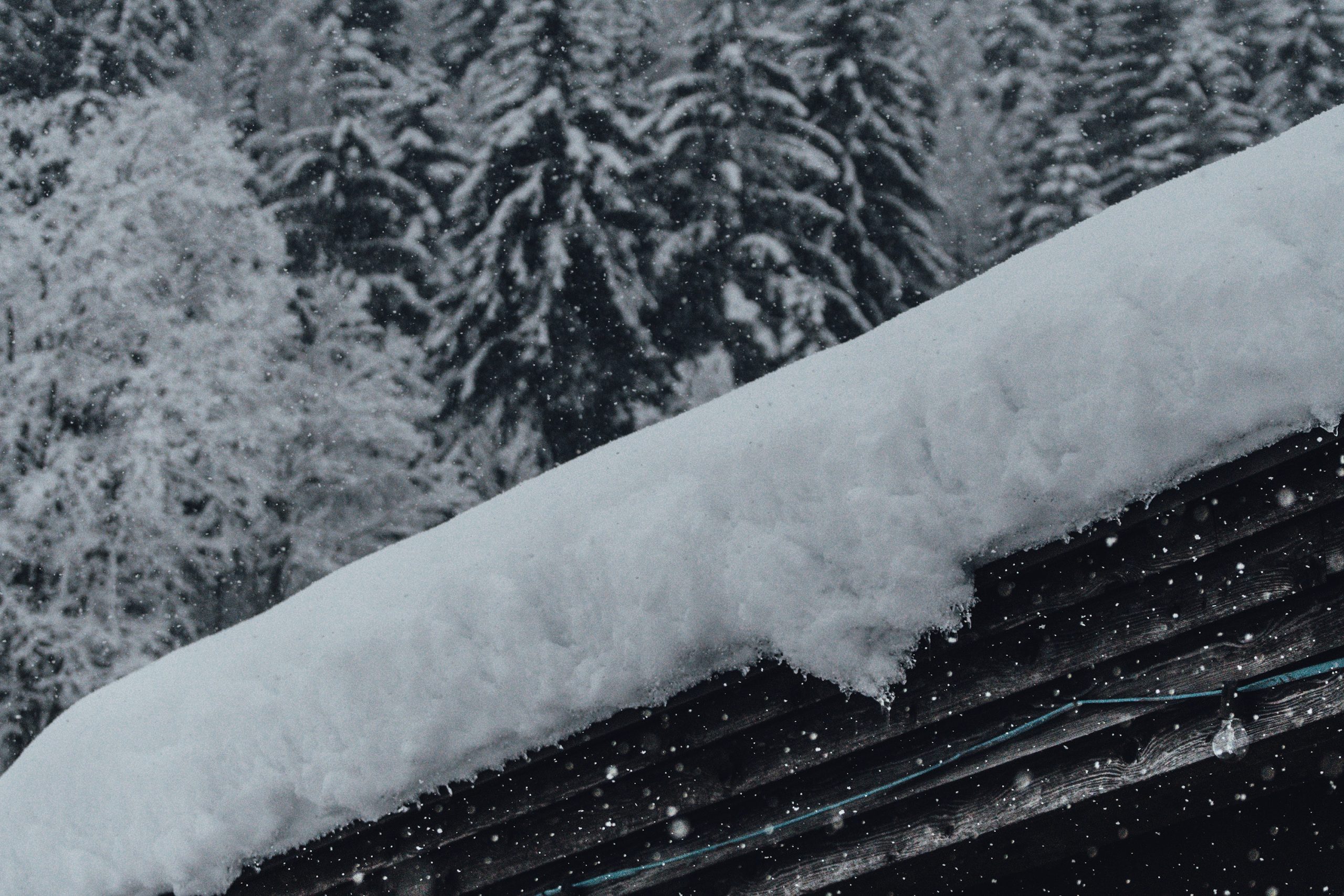
We remove rooftop snow with shovels, taking it down to a thin one-inch skiff so we aren’t scraping shingles or the roof underneath. Once the snow is off, the sun handles the rest of the melt without backing water up at the eaves. Done by an experienced crew, this approach removes the weight and the ice-dam risk without touching the shingles.
For an ice dam that’s already formed, we use the same careful manual approach to remove the bulk of the ice without damaging what’s underneath. After the snow and ice is off the roof, we clear walkways and driveways and pile the snow on your property out of the way.
For homes that get ice dams every winter, removal is only half the job. We’ll also look at what’s causing the dam to form in the first place, usually some combination of heat loss into the attic, missing or compressed insulation, or blocked soffit ventilation. Fixing those root causes is what stops the dams from coming back the next winter.
Rooftop snow removal after major snowfalls, especially on flat or low-slope sections that can’t shed snow naturally. Ventilation stack clean-outs when frozen plumbing vents are backing up sewer gas into the house. Soffit and fascia repair to restore ventilation flow that’s been blocked by paint, debris, or improper installation.
Heat loss from the living space into the attic is the root cause of most ice dams, and better attic insulation is usually the first fix worth considering. There’s also an architectural side: some roofs are designed in a way that funnels or holds snow in specific spots, creating problem areas where snow builds up faster than it can shed. Both come up on Winnipeg homes, and the fix is different for each.
Recessed lights, attic hatches, plumbing vents, and electrical penetrations all leak warm air upward. Once that warm air reaches the underside of the roof deck, it melts the snow on top, even when the outdoor temperature is well below freezing. Air sealing those penetrations is often the single biggest fix.
Most older Winnipeg homes were built with R-20 or R-30 attic insulation. Current code calls for R-50. The difference shows up as ice dams. Topping up attic insulation is one of the most cost-effective ways to stop ice dams from recurring. We don’t do insulation work ourselves, but we can recommend a contractor who does it and knows the Efficiency Manitoba rebate process.
Soffit vents draw cold outdoor air into the attic to keep the roof deck cold. If the soffit vents are painted over, blocked by insulation, or never installed correctly, the attic stays warm and the roof melts snow. We check ventilation as part of every ice dam visit, and we can fix it as part of soffit and fascia work.
Some roofs are designed in a way that funnels or holds snow in specific spots, such as additions, valleys, and dormer transitions, where snow builds up faster than it can shed. On houses with this kind of design, removing snow from those problem areas before they turn into an ice dam is part of normal winter maintenance.
Snow and ice dam work is done by the same crews who do our roof installations, people who know roofs and how to clear them without damaging the shingles underneath. Manual shovel removal that leaves a thin skiff of snow on the roof keeps the asphalt protected, and walkways and driveways are cleared after the snow comes off.
The questions we hear most about ice dam and snow removal are practical winter ones: cost, response time during cold snaps, whether removal damages shingles, and whether ice dams will keep coming back. Plain answers below.
Not when it’s done properly. We leave a thin skiff of snow on the roof and don’t scrape down to the shingles, which keeps the asphalt undamaged. The sun handles the rest of the melt once the bulk of the snow is gone. Done by an experienced crew, snow and ice dam removal doesn’t take time off your roof’s lifespan.
Response time depends on the day. After a major snowfall or a warm-up that triggers widespread ice damming, we book up fast, sometimes a few days out. If you call early in the season or before things turn into emergencies for everyone, we can usually be there within a day or two.
If the underlying cause isn’t addressed, yes, almost always. If you fix the insulation, ventilation, and air sealing issues that caused it, usually no. We’ll diagnose the cause during the removal visit so you can decide whether to take those fixes on this year or next.
It’s an agreed-upon hourly rate, discussed before we arrive. Cost depends on the size of the roof, the intricacy of the job, and how much ice or snow needs to come off. We’ll give you a clear rate up front so there are no surprises.
Usually no. Most Winnipeg roofs are designed to handle the snow load they’ll see in a normal winter. Where snow removal matters is on flat or low-slope sections that can’t shed snow on their own, on roofs with structural concerns like older homes, additions, and garages with marginal framing, and on roofs with architectural snow traps where snow builds up faster than it can shed. If you’re not sure, we’ll take a look.
If you’ve got ice dams forming, water marks on your ceiling, or heavy snow loading on a flat section, get in touch. The earlier in the winter we hear from you, the faster we can get out, and the cheaper the fix usually is.
Monday – Friday: 8:00 AM – 4:00 PM
Saturday: Closed
Sunday: Closed