
A skylight in a Winnipeg home is one of the highest-impact renovations you can do for natural light, and one of the highest-risk for water intrusion if it’s installed wrong. The risk isn’t the skylight itself. Modern Velux units are well-engineered and reliable. The risk is the flashing. Skylight flashing has to handle wind-driven rain in spring, snow load and ice damming in winter, and the contraction and expansion of metal against shingle through Manitoba’s severe weather swings. Done right, a skylight lasts as long as the roof around it. We install Velux skylights across Winnipeg, typically as part of a re-roof so the flashing integrates cleanly with new shingles, but also as standalone replacements on existing roofs in River Heights, St. Vital, and similar neighbourhoods.
We work with an interior contractor in unison to install Velux skylights. The interior contractor handles the framing, cut-in, headers, and interior finishing. We handle the roof side: waterproofing the curb and deck, installing the Velux flashing kit, and tying the shingles into the flashing so water always sheds away from the opening. Working with an established interior contractor on every job means the whole install is coordinated rather than handed off between two trades that haven’t met.
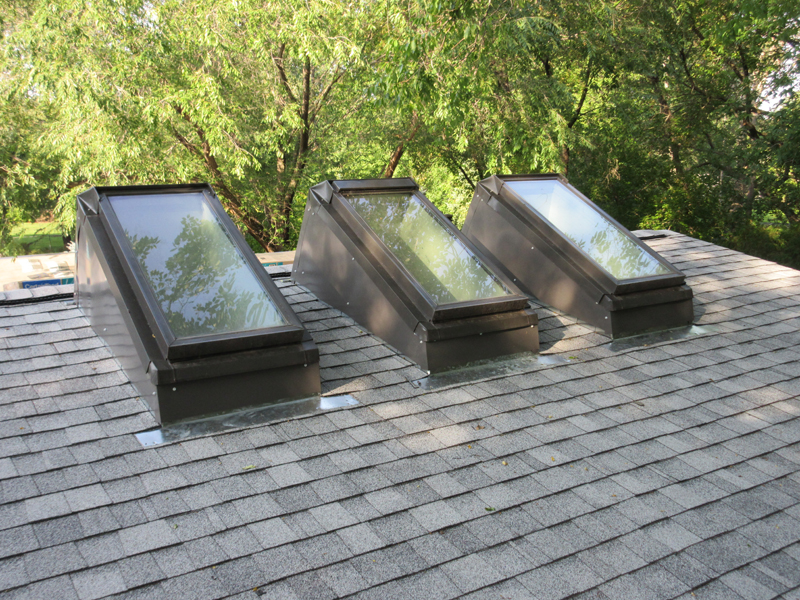
On the roof side, the Velux flashing kit goes on in a specific sequence: head flashing above, step flashing along the sides, sill flashing below. Each piece tucks into the shingle courses in the right order so that water flowing down the roof slope is shed away from the opening, never into it. Doing this as part of a full re-roof means the surrounding shingles are new and tied into the flashing cleanly. Doing it as a standalone install means working around existing shingles, which requires careful cutting and seating to maintain the seal.
For a brand-new skylight (rather than replacing an existing one), the interior contractor’s structural framing comes first, and we come in afterward for the roof side once the opening is ready. For a same-size replacement of an existing skylight, the framing is already there and the whole job moves faster.
We install Velux fixed skylights (most common, for spaces where ventilation isn’t the goal), Velux venting skylights (for kitchens, bathrooms, and other spaces where opening the skylight matters), and Velux Solar Powered Fresh Air skylights (operable without wiring, with rain sensors). Each works with manufacturer flashing kits suited to asphalt shingle installation.
Doesn’t open. Lower cost, fewer mechanical parts, lower risk of long-term seal failure. Right for spaces where ventilation isn’t a priority: stairwells, hallways, living rooms with existing windows.
Opens manually or with a powered actuator. Useful in bathrooms (humidity venting) and kitchens (cooking smoke and steam). The opening mechanism adds some long-term maintenance to plan for but the function is often worth it.
Opens via a solar-powered motor without needing to wire the skylight into the house. Includes rain sensors that close the skylight automatically when precipitation is detected. Higher cost up front but useful in retrofit situations where running wiring isn’t practical.
Most skylight failures are flashing failures, and flashing failures are usually installation failures. We install skylights the same way we install everything else on a roof, with proper attention to the transitions where water gets in. Integrating skylight installs with re-roof work is where we add the most value.
Skylight questions tend to centre on whether they leak, whether to install during a re-roof or separately, and how they perform in Winnipeg’s deep cold and heavy snow. Plain answers below.
Properly installed Velux skylights with manufacturer flashing kits don’t leak. They have a strong track record across Winnipeg installations. Skylights that leak are almost always installation failures (improper flashing sequence, missing waterproofing membrane at the curb, poor shingle integration) rather than product failures. The way you avoid leak risk is choosing the installer carefully.
During a re-roof, if the timing works. Installing during a re-roof means new shingles tie into the flashing properly, the warranty covers both the roof and the skylight install, and the total cost is lower than two separate trips. Standalone installs are fine when the existing roof has years of life left.
Modern Velux skylights are insulated to perform similarly to a high-quality window. There’s some heat loss compared to a fully insulated roof section, but it’s not the heat-loss disaster some homeowners worry about. In summer, skylights can let in significant solar gain. Venting models or models with blinds help manage that.
Snow accumulates on skylight glass the same way it does on the surrounding roof, then either slides off (on steeper pitches) or melts gradually. The flashing around the skylight is designed to handle the meltwater. Ice dams can form around skylights on poorly ventilated attics, same root cause as ice dams elsewhere on the roof. See our ice dam removal page for more.
Yes. Replacement of a same-size skylight in the existing opening is a relatively contained job. We strip the old flashing, remove the old skylight, install the new unit, and re-flash with the manufacturer kit. Plan on a day for most replacements. Going to a larger skylight size requires structural work and is a bigger project.
If you’re thinking about adding a skylight, replacing an existing one, or working it into a re-roof, get in touch. We’ll come take a look at the space, talk through the options, and give you a quote within 72 hours.
Monday – Friday: 8:00 AM – 4:00 PM
Saturday: Closed
Sunday: Closed