
A lot of Winnipeg homes have a flat or low-slope section somewhere: an addition off the back, a porch roof, a garage with a flat top, a 1960s infill house with the whole upper level low-slope. These sections drain differently from a pitched roof, leak differently, and need a different material to keep water out. We handle flat sections in-house, typically as part of a re-roof on a house where the pitched section and the flat section are both due. We’ve done flat work in West End additions, Wolseley infill homes, and garages in River Heights since 2011.
We install Flintlastic by CertainTeed, a 2-ply cold-apply modified bitumen membrane built for residential flat sections. The cold-apply process uses adhesives instead of an open-flame torch, which is safer to install on a roof above an occupied house. Most residential flat sections are a one-to-two-day job, done with proper edge details and drain integration.
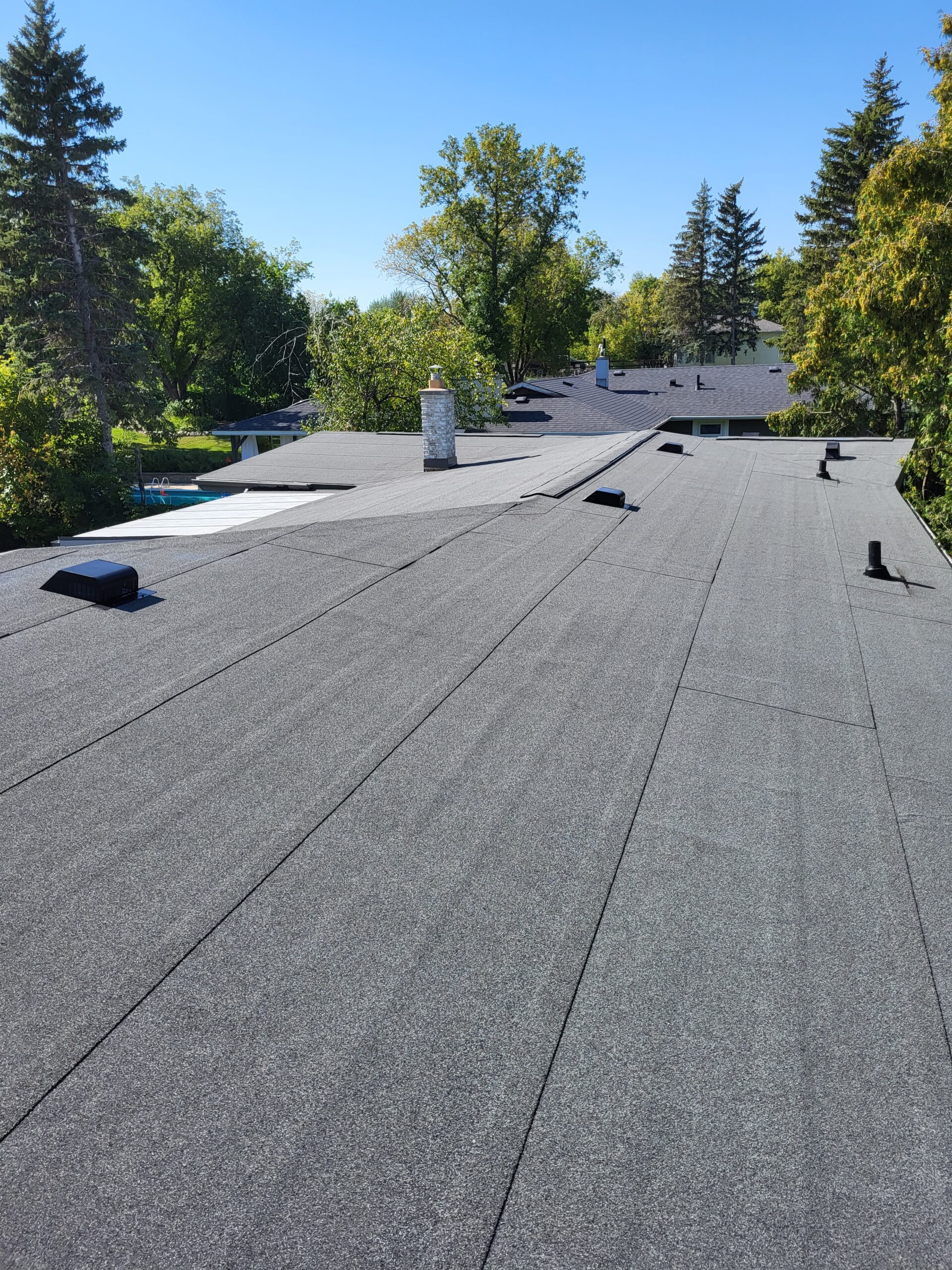
The work starts with tear-off of the existing flat roofing system. We inspect the deck for soft spots and replace any rotten material before the new membrane goes on. Then we install a base sheet, followed by the cap sheet bonded to the base with cold adhesive. The granule-faced cap is the visible surface and provides UV protection.
Edge details and drain integration are where most flat roofs fail. We use proper edge metal at perimeters, flash all penetrations (vents, pipes, scuppers), and tie the membrane into pitched-roof transitions cleanly. On houses with both pitched and flat sections, the transition between the two is the most leak-prone area. We treat that as a single integrated job rather than two separate ones.
Two-ply construction means there’s a redundant waterproofing layer if the top membrane gets damaged. The granular cap protects against UV across Winnipeg’s intense summers. The cold-apply adhesive bonds the two layers across the full membrane area, which holds up under freeze-thaw and the standing water that flat sections sometimes deal with after a heavy melt. Cold-apply also avoids running an open-flame torch on a roof above living spaces.
Most residential flat roofs in Winnipeg are part of a larger re-roof job. The house has a pitched main roof and a flat addition, and both need attention. Treating those as one integrated job (instead of two separate trades) keeps the transitions tight and the warranty unified.
Flat roofing questions tend to be about lifespan, whether modified bitumen can go over existing material, and whether flat sections need special winter snow removal. Plain answers below.
A properly installed 2-ply cold-apply modified bitumen roof in Winnipeg typically lasts 20 to 30 years. The granular cap protects against UV, the cold-applied seams hold up under freeze-thaw, and the multi-layer construction means small damage doesn’t immediately cause a leak. End of life usually shows as cracking along seams or granule loss across the surface.
Sometimes, if the existing roof is sound and the deck underneath doesn’t have soft spots. More often we recommend tear-off. Overlay systems hide problems and shorten the lifespan of the new roof. On older Winnipeg flat roofs especially, we usually find issues at the deck that need fixing before the new membrane goes on.
Sometimes, on flat sections with heavy snow accumulation or marginal structural framing. Most properly designed flat residential roofs handle a normal Winnipeg winter without intervention, but additions on older houses and garages with light framing can benefit from rooftop snow removal after major storms.
Walking on it occasionally for maintenance is fine. The granular cap is durable. Regular foot traffic, mounted equipment, or storage will damage the membrane over time. If you need a flat roof that doubles as a deck or terrace, that requires a different system entirely.
If you’ve got a flat section that’s leaking, ponding, or showing its age, get in touch. We’ll come take a look, give you a written quote within 72 hours, and pair the work with any pitched-roof or other exterior work you need.
Monday – Friday: 8:00 AM – 4:00 PM
Saturday: Closed
Sunday: Closed